- Position:
- Home

- English Home
- JP group Sustainability
- Society
- Creating Friendly Workplaces for Employees
Creating Friendly Workplaces for Employees


To remain a corporate group where everyone can thrive and work with dignity
We see a growing need to develop a work environment where everyone can work with dignity regardless of gender, age, disability, or nationality. In recent years, workstyle reforms have been promoted to enable all employees to work in a fulfilling manner. These initiatives promoting flexible work arrangements that support a healthy work-life balance and reducing excessive working hours.
Promoting a healthy work-life balance
The Japan Post Group is also working to establish systems and foster a workplace culture that enable employees to choose from a variety of flexible work options according to their stage of life.
Formulation of a general employer action plan based on the Act on Advancement of Measures to Support Raising Next-Generation Children (Next Generation Act)
The Japan Post Group formulated its general employer action plans based on the Next Generation Act and is committed to enabling employees to balance work and family life. All group companies publish their General Employer Action Plans on “Ryoritsu Shien no Hiroba" (the Work-life Balance Support Website operated by the Ministry of Health, Labour and Welfare).

Ryoritsu Shien no Hiroba (Ministry of Health, Labour and Welfare: Japanese)
Balancing Work with Childcare, Nursing Care, and Illness
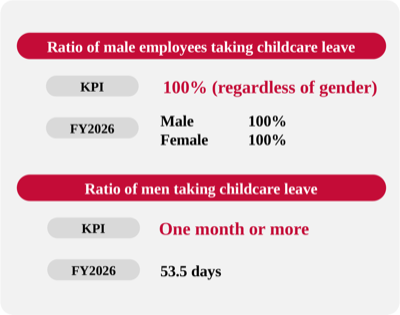
Regarding childcare and nursing care, we have put in place systems that exceed legal requirements and implemented various support measures to enable both male and female employees to continue working, rather than leave the company, during periods when support is needed for pregnancy, childbirth, childcare, or nursing family members.
In addition to these systems and support measures, we are actively promoting childcare leave among male employees in order to achieve our childcare leave targets and foster a workplace culture in which taking childcare leave is considered normal for all employees.
In particular, we require male employees to take the paid leave portion (3 days) of childcare leave. In addition, managers encourage male employees to take leave and to confirm their intentions regarding taking childcare leave of 4 weeks or longer.
More specifically, full-time employees may take up to three years of childcare leave, up to nine years of partial childcare leave (15 years if the child has a disability), and up to one year of nursing care leave. We have also introduced partially paid childcare leave, leave for fertility treatment and a program to rehire former employees who left the company for childcare, nursing care, medical treatment, or other personal reasons.
In addition, we revised the eligibility period for childcare-related leave to allow employees to take such leave until the end of the child’s third year of elementary school and extended the maximum period of partial nursing care leave to five years.
Japan Post Holdings has received the Kurumin Certification from the Ministry of Health, Labour and Welfare. Japan Post Bank and Japan Post Insurance have received the Platinum Kurumin Certification. We will continue our efforts to support employees in balancing work and child-rearing responsibilities.
Female employees may take a total of 14 weeks of maternity leave before and after childbirth. (Full-time employees receive paid leave during this period.)
To promote the uptake of childcare leave among male employees, we require male employees to take the paid leave portion (3 days) of childcare leave. In addition, managers encourage male employees to take childcare leave and confirm their intentions regarding childcare leave of four weeks or longer.
With regard to employee health and medical treatment, we are improving the work environment and promoting work-life balance through measures such as enhanced sick leave, leave of absence programs, and leave for fertility treatments, enabling employees to continue working with peace of mind.
To further deepen each employee's understanding of diversity, the Japan Post Group conducts Diversity Enhancement Month initiatives.
In FY2026, "Health Issues Across Different Life Stages" and "Menopause" were selected as key themes. Through information sharing and awareness-raising activities, we promoted understanding of these topics among employees.
We will continue to promote a workplace environment in which employees can improve their health literacy and understand and support one another's individual circumstances.
Measures, etc. for supporting employees in their balancing of work and childcare
| Measures, etc. | Child's age | Details |
|---|---|---|

|
||
| 3 days of paid childcare leave |

|
Employees who have not taken maternity leave will receive pay for the first three days of childcare leave taken during the period from the child's birth until the day after eight weeks have passed since the child's birth. Eligible employees are required to request and take these first three days. Note: Applicable only full-time employees and rehired elderly employees |
| Childcare leave at birth |

|
Employees who have not taken maternity leave may take childcare leave at birth for up to four weeks (28 days) during the period from the child's birth until the day after eight weeks have passed since the child's birth. |
| Childcare time |

|
Employees raising a child younger than one year old may spend 45 minutes of their work hours twice a day taking care of the child, which may also be combined to 90 consecutive minutes. |
| Childcare leave |

|
Employees raising a child under three years of age may take childcare leave until the day the child reaches the age of three. Fixed-term employees may take childcare leave until the child reaches one year of age. However, the leave period may be extended until the child reaches one year and two months of age if both parents meet certain requirements, such as taking childcare leave, or until the child reaches two years of age if certain requirements are met, such as being unable to enroll the child in a nursery school. |
| Partial childcare leave |

|
Employees raising a child may take partial childcare leave of up to two hours per day until March 31 of the fiscal year when the child reaches nine years of age. (Or until the end of the fiscal year in which the child becomes 15 years old if the child has a disability, a chronic disease or a similar condition) |
| Childcare Leave for Sick or Injured |

|
Employees raising a child until the end of the child's third year of elementary school may take up to five days of leave per fiscal year (or ten days if they have two or more children) for childcare-related purposes. |
| Limitations on late-night work |

|
Employees raising a child that has not yet entered elementary school may request to decline late-night work. |
| Limitations on overtime work |

|
Employees raising a child that has not yet entered elementary school may request to limit overtime work to 24 hours or less per month and 150 hours or less per year. |
| Exemption from overtime, etc. |

|
Employees raising a child that has not yet entered elementary school may request to be exempted from working overtime or working on regular days off. |
| Subsidies for babysitters and temporary use of childcare facilities |

|
Employees may receive subsidies for babysitting services and temporary childcare services for preschool children through a comprehensive employee welfare service program (up to 60 childcare subsidy coupons per year, worth 700 yen per hour). |
| Childcare consultations |
|
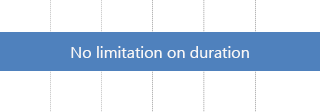
Employees may use childcare consultation services free of charge through the Childcare and Nursing Care Support Hotline and the childcare consultation hotline provided by the Japan Post Mutual Aid Association. |
Measures, etc. to support employees balancing work and nursing care
| Measures, etc. | Period | Details |
|---|---|---|

|
||
| Limitations on late-night work |
|
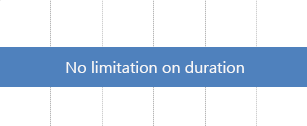
Employees taking care of a person in need of nursing care may request to decline late-night work. |
| Limitations on overtime work |
|
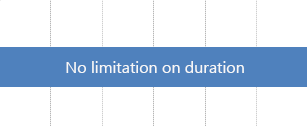
Employees taking care of a person in need of nursing care may request to limit overtime work to 24 hours or less per month and 150 hours or less per year. |
| Exemption from overtime, etc. |
|
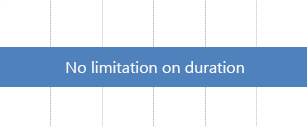
Employees taking care of a person in need of nursing care may request to be exempted from working overtime or working on regular days off. |
| Family care leave |
|
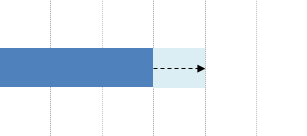
Employees taking care of a person in need of nursing care may take up to a total of 183 days of family care leave per family member requiring care until the individual no longer requires care. If the company recognizes special circumstances, family care leave may be taken one year or less from the start date of the leave. (For fixed-term employees, the maximum leave period is 93 days in total.) |
| Partial family care leave |

|
Employees caring for a family member requiring care may take partial family care leave for up to four consecutive hours from the start of working hours or up to four consecutive hours before the end of working hours within five years from the commencement of use. |
| Family Care Time Off |

|
Employees caring for a family member requiring care may take up to five days of leave per fiscal year (or up to ten days if caring for two or more family members requiring care) to provide care or other necessary assistance. |
| Nursing care subsidy |
|
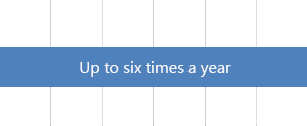
Family care expenses for a family member within the second degree of kinship who is certified as needing assistance or nursing care (or whose application for certification is pending) may be subsidized for the portion exceeding long-term care insurance benefit limits. |
| Family Care Consultations |
|
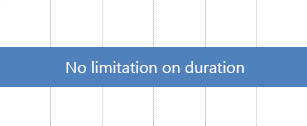
Employees may use family care consultation services free of charge through the Childcare and Family Care Support Hotline, the Japan Post Mutual Aid Association, and the Federation of National Public Service Personnel Mutual Aid Associations. |
Reducing Overtime Work, Promoting Telework

We are making efforts to reduce overtime through improved operational efficiency, including the use of RPA* and AI, and the review of work processes) while also introducing a minimum rest period between work shifts.
We have been promoting telework with the aim of improving productivity and enabling diverse work styles, and we will continue to enhance the environment that supports telework.
- *Robotic Process Automation, the automation of business operations mainly using software robots.
Measures to support work-life balance
Improvement of guidebooks, etc.
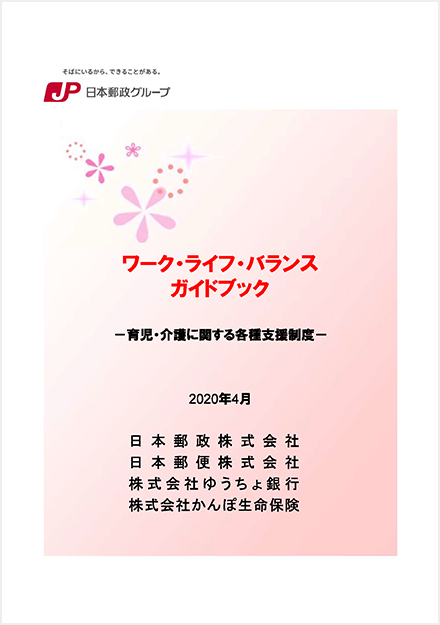
The Japan Post Group distributes the Work-life Balance Guidebook to all employees and operates a Work-life Balance Information Website where Group employees can exchange information with one another.
We are implementing initiatives to promote work-life balance among Group employees. Examples include organizing seminars on balancing childcare and family care and work.
Seminars on balancing work and childcare
To support employees in balancing work and childcare, the Japan Post Group organizes seminars titled “Balancing Childcare and Work with Your Partner”, for employees on childcare leave and other eligible employees. Participants may attend the seminars together with their partners and children.
The seminars feature lectures by external experts on topics such as balancing work and childcare and career development during the child-rearing years. Participants also take part in groups discussions to share thoughts and insights on balancing work and childcare, including practical tips, rewards, and challenges associated with raising children while pursuing a career. At the end of the seminar, participants are introduced to the Group’s childcare support programs and receive information on available employee welfare services.
Feedback from participants
"It was inspiring to hear different perspectives on topics such as childcare and career development. I would like to discuss many of the ideas shared during the seminar with my partner."
Seminars on balancing work and family care

To support employees in balancing work and family care responsibilities, the Japan Post Group organizes seminars on balancing work and family care. At these seminars, external experts provide information on public and other support services available to employees who need to care for family members while continuing to work. Participants also receive information on the Group's family care support programs and employee welfare services.
Since 2021, seminar videos have been made available so that employees can learn from them at any time.
Enhancing Managers' Awareness
As society continues to change, employees' ways of working are becoming increasingly diverse. To support employees who are raising children or caring for family members, it is essential that managers understand their circumstances. Japan Post is working to enhance managers' awareness by incorporating training programs designed to strengthen management skills and improve support for employees with childcare and family care responsibilities.
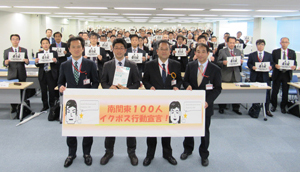
Japan Post joined the IkuBoss corporate alliance, operated by the nonprofit organization Fathering Japan, in January 2017 and conducts internal training programs nationwide to deepen understanding of IkuBoss.
Support and affiliation
Affiliation with IkuBoss Corporate Alliance

The Japan Post Group participates in the IkuBoss corporate alliance operated by the nonprofit organization Fathering Japan and, based on the belief that it is important for all employees to remain healthy and fulfilled, strives to develop outstanding "IkuBosses*". An IkuBoss supports subordinates' work-life balance, achieves results at work, and enjoys both professional and personal life.
- *IkuBoss is a manager who understands and supports the childcare, family care, and work-life balance needs of subordinates and colleagues. (Source: Ministry of Health, Labour and Welfare website)
Supporting the 100% Paternity Leave Declaration
The Japan Post Group supports the 100% Paternity Leave Declaration promoted by Work Life Balance Co., Ltd. and promotes initiatives to help employees balance work and childcare, with the goal of creating an environment in which all male employees can take childcare leave.
Relevant information

- Japan Post Group Sustainability
- Sustainability Management
- Policy, Approach and Framework
- Material Issues Relating to Sustainability
- Promotion of Sustainability Management
- ESG investments
- Integration of ESG factors into asset management and involvement in joint initiatives
- Sustainability Finance
- Dialogue with Stakeholders
- Endorsement of Initiatives
- External Assessments
- Environment
- Environmental Management System
- Response to TCFD and TNFD recommendations
- Targets, Results, and Other Matters Related to Climate Change
- Initiatives Related to Climate Change
- Responding to biodiversity conservation
- Targets, Results, and Other Matters Relating to Pollution Control and Resources Recycling
- Pollution Control and Recycling Initiatives
- Society
- Development and Revitalization of Local Communities
- Promoting Healthy Lifestyles
- The Group Human Resources Policy
- Creating Friendly Workplaces for Employees
- Promotion of Diversity
- Human Resources Development
- Health Management Initiatives

- Occupational Health and Safety Initiatives
- Japan Post Group Human Rights Policy
- Respect for Human Rights and Labor
- the Basic Policies for Customer-First Business Operations
- Japan Post Group's Approach to Procurement Activity
- Japan Post Group CSR Procurement Guidelines

- Supply Chains
- Governance
- ESG-related Information
- Topics related to Group Sustainability
- Sustainability Management